Can cenospheres help create a lighter concrete that retains substantial strength after a fire? Research by Wojciech Szymkuć and Piotr Tokłowicz describes an ultra-lightweight cementitious composite tested after exposure to temperatures as high as 1000°C. This review explains the complete results, their likely mechanisms and the limits that matter in formulation and structural design.
What are cenospheres and why use them in concrete?
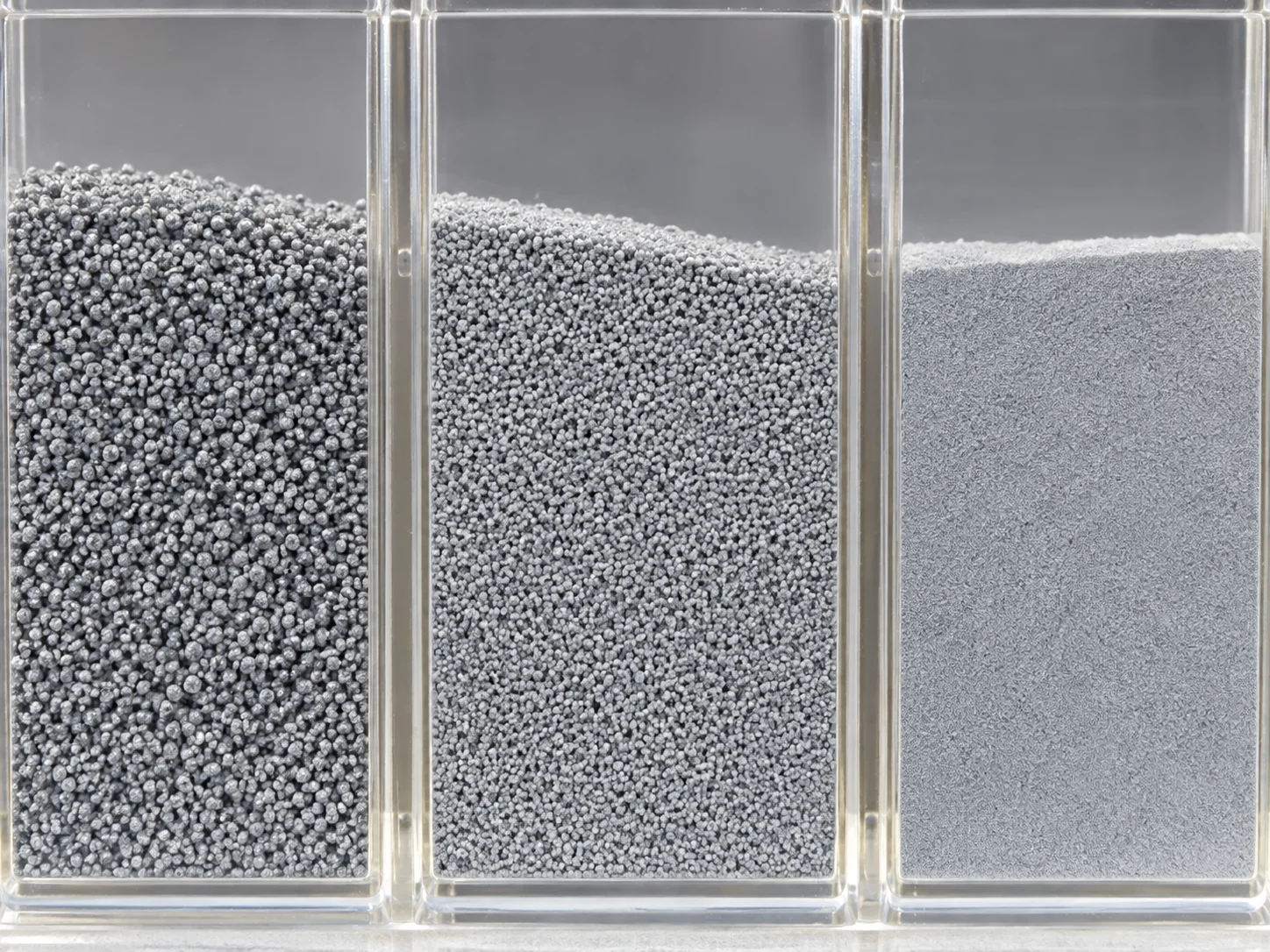
Cenospheres are lightweight, hollow aluminosilicate particles recovered from coal-combustion ash. Their spherical geometry, low particle density and closed internal void can reduce composite density and heat transfer when they replace part of a conventional aggregate or filler system.
Cenospheres do not automatically make every concrete fire resistant. Particle grading, shell strength, volume fraction, moisture, mineral composition, matrix compatibility and mixing energy all affect the final result. The publication therefore provides evidence for one defined formulation, not a universal product claim.
How was the composite prepared and tested?
The ULCC contained, per cubic metre, 776 kg of CEM I 42.5R cement, 67 kg of silica fume, 354 kg of cenospheres, 234 kg of water and 19 kg of polymer superplasticiser. The mix contained no coarse aggregate and had a reported flow of 125 mm.
The 40 × 40 × 160 mm specimens were water-cured for 28 days and tested at an age of approximately six months. Separate series were exposed to 105, 400, 600, 700, 800 and 1000°C, allowed to cool naturally and then tested. The results describe residual post-exposure properties, not load-bearing capacity during an active fire.
Key results
The reference material reached 52.5 MPa at a density of approximately 1443 kg/m³. Strength increased after exposure to 105°C, remained close to the reference value at 400°C and declined more clearly above 700°C.
| Temperature | Compressive strength | Residual strength | Residual density |
|---|---|---|---|
| 20°C | 52.5 MPa | 100% | 100% |
| 105°C | 58.1 MPa | 111% | 89% |
| 400°C | 52.1 MPa | 99% | 85% |
| 600°C | 48.2 MPa | 92% | 85% |
| 700°C | 46.7 MPa | 89% | 83% |
| 800°C | 40.5 MPa | 77% | 81% |
| 1000°C | 30.5 MPa | 58% | 80% |
Why can cenospheres help at elevated temperatures?
Cenospheres are hollow aluminosilicate particles with low thermal conductivity and a high melting temperature. Their thermal expansion can be lower than that of conventional concrete constituents, reducing stresses caused by incompatible deformation between aggregate and matrix.
The SEM analysis reported by the authors showed no distinct damage at the cenosphere-matrix interface after exposure to 600°C. This may help explain the favourable residual strength of the investigated composite.
Implications for structural design
In the numerical studies, replacing normal concrete with ULCC reduced reinforcement temperatures by as much as 250°C. Across the analysed concrete-filled steel tube variants, the mean increase in fire resistance time was 97 minutes, equivalent to 78%.
These figures apply to one formulation and a defined set of structural models. They should not be transferred directly to another product or design. Implementation requires verification of particle grading, cenosphere quality, moisture, mixing method and the full mechanical and thermal property set.
What are the limits of the study?
The programme covered one ULCC composition, one cenosphere source and a defined heating and cooling regime. It did not compare the full range of commercial cenosphere grades, particle-size distributions, volume fractions or surface treatments. Its numerical fire-resistance results also depend on the analysed geometry, load and model assumptions.
Residual strength after cooling is not equivalent to performance during a fire. A real project must also assess moisture, spalling risk, thermal expansion, creep, reinforcement bond, durability and the behaviour of the complete element under its intended fire scenario.
What does this mean for microsphere selection?
The research supports the use of cenospheres as a functional lightweight aggregate rather than merely an inert filler. Selection should start with target density, particle-size range, workability, mechanical performance and service temperature. Because a small mass occupies a large volume, cenospheres should be dosed by considering volume rather than by making a simple kilogram-for-kilogram substitution.
- Define the objective: density reduction, insulation, residual strength or a balance of all three;
- Match the fraction: particle size must suit section thickness, mould geometry and application equipment;
- Control mixing: excessive shear can damage hollow particles;
- Test the full formulation: a cenosphere data sheet cannot predict the properties of cured concrete;
- Validate thermally: test the actual formulation and element in the relevant temperature range.
Conclusion
The study provides a strong proof of concept: a carefully designed cenosphere ULCC can combine a density of about 1450 kg/m³, compressive strength above 50 MPa and substantial post-heating strength. It retained 92% of its reference strength after 600°C and 58% after 1000°C.
The correct engineering conclusion is not that adding cenospheres automatically creates fireproof concrete. Rather, cenospheres are a promising design tool for lightweight cementitious composites with controlled thermal properties, provided the specific material, formulation, manufacturing process and structural element are validated.
Frequently asked questions about cenospheres in concrete
Do cenospheres make every concrete fire resistant?
No. Fire performance depends on the complete formulation, moisture, element geometry, reinforcement, load and fire scenario. Cenospheres may improve selected properties, but every system needs separate validation.
How much strength did the composite retain after 1000°C?
After heating to 1000°C and natural cooling, the tested ULCC reached 30.5 MPa, equal to 58% of its initial 52.5 MPa compressive strength.
What density and thermal conductivity were reported?
The reference density was approximately 1443 kg/m³ and room-temperature thermal conductivity was 0.60 W/(m·K). These values apply to the specific published formulation.
Can these results be used as Spheron product specifications?
No. The figures describe the researchers’ composite, not cenospheres alone or any Spheron product. They can guide a laboratory trial and validation programme.
How should a cenosphere concrete trial begin?
Define the target density, grading, workability, strength and temperature range, then compare several dosages in controlled laboratory batches and test both fresh and hardened properties.