A structured trial helps you compare microsphere options under the same formulation and process conditions.
A useful microsphere trial starts with a clear comparison plan. Keep the base formulation and test conditions consistent so your team can evaluate each change against a control batch.
Start with one application and one question. Decide what you want to check first, such as mixing behavior, appearance, or handling in your current process. Keep the first round narrow so the results are easier to compare.
Set one objective before you mix
Record the base formulation, the target application, and the property you want to observe. If you are working on coatings, you may focus on dispersion and surface appearance. If you are preparing a dry blend, you may focus on flow and blend uniformity. If you are testing a composite, the main question may be how the material behaves during mixing.
Choose your observation method before the first batch. Use the same checks for every run, such as mixing time, visual appearance, and side-by-side comparison with the control batch. That keeps the trial practical and easier to repeat.
Record the formulation and addition order.
Prepare one control batch first.
Use the same mixing settings for every batch.
Note observations immediately after preparation.
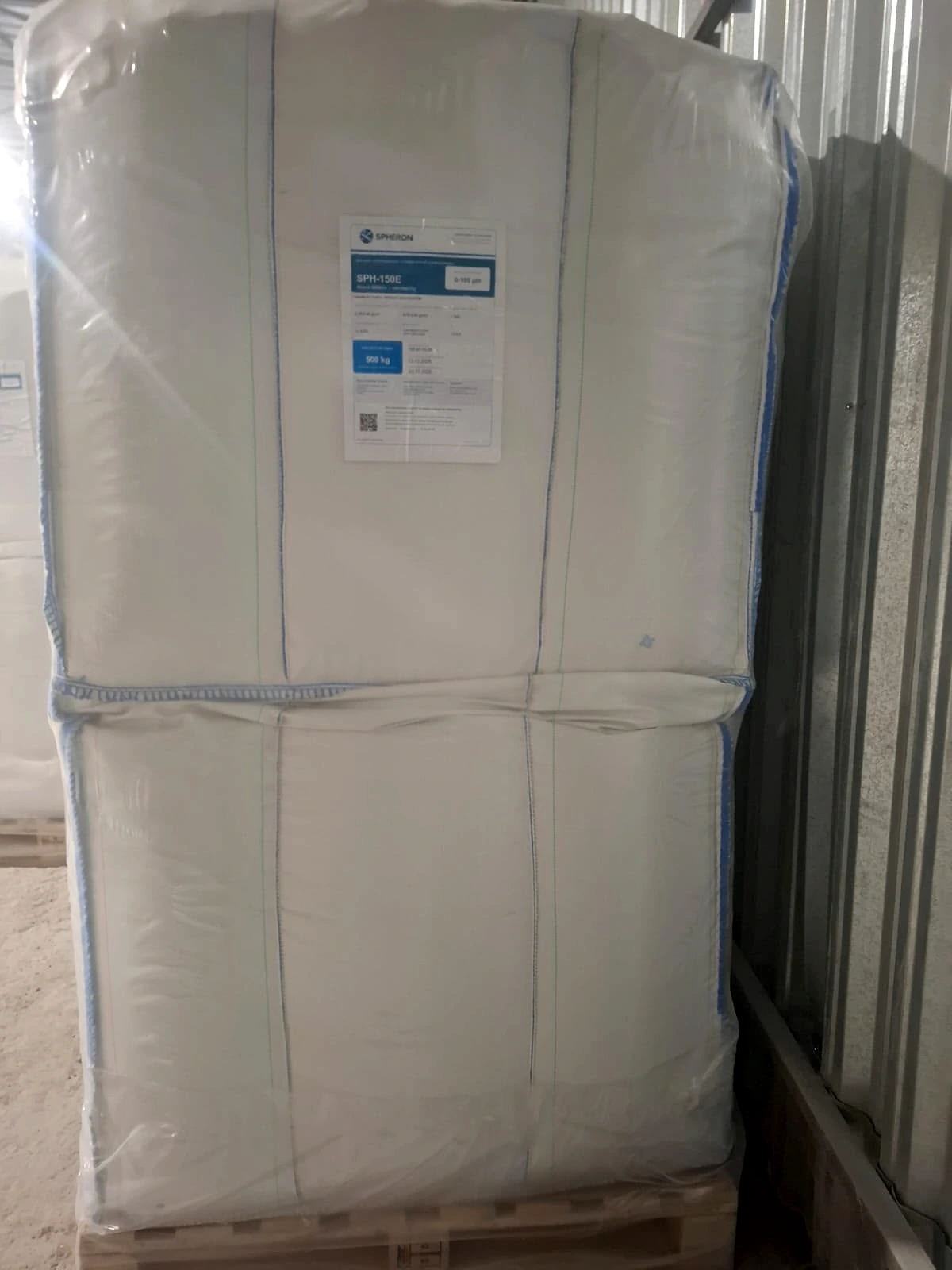
The technical datasheet for SPH-150E gives a particle-size range of 0–150 µm.
Select a starting grade and sample format
Use the published particle-size range to narrow the starting grade. The listed SPHERON grades cover different fraction ranges, so begin with the grade that best matches the process window you already use. If the first result is unclear, adjust only one factor in the next round.
For handling, choose a format that fits your lab or pilot setup. Avoid extra transfers when you can. That helps you keep the comparison focused on the formulation, not on avoidable handling differences.
Before you request a sample, review the product data for SPH-150E and SPH-300A.
The technical datasheet for SPH-300A gives a particle-size range of 0–300 µm.
Prepare the comparison trial
Use the same base formulation for all runs.
Keep batch size, addition order, and mixing settings unchanged.
Add the microsphere grade in a measured amount.
Prepare the control batch first, then the candidate batch or batches.
Label every sample clearly and record notes right away.
If your process is sensitive, change only one variable at a time. That may be the addition sequence, the loading level, or the grade itself. One change per round makes the result easier to interpret and easier to discuss with your technical contact.
The technical datasheet for SPH-500E gives a particle-size range of 0–500 µm.
Check handling and quality points
Review the published quality data before you move beyond the first comparison. Sinkers, moisture by mass, pH range, and colour can help you decide whether the material fits your handling routine and the appearance you want to inspect during the trial.
Keep the material sealed between runs, use clean tools, and avoid unnecessary transfers. That helps preserve the sample until the comparison is complete.
The SPH-150E datasheet lists sinkers of < 10 % using the Imhoff cone method, moisture by mass of ≤ 0.5 % and a pH range of 7.0–9.9. The stated colour is light grey to grey.
The SPH-300A datasheet lists sinkers of < 5 % using the Imhoff cone method, moisture by mass of ≤ 0.5 % and a pH range of 7.0–9.9. The stated colour is white to light grey.
The SPH-500E datasheet lists sinkers of < 5 % using the Imhoff cone method, moisture by mass of ≤ 0.5 % and a pH range of 7.0–9.9. The stated colour is light grey to grey.
Review the batches and decide the next step
Compare the batches side by side after the trial. Review the control first, then look at each candidate batch in the same order you prepared them. Note what changed, what stayed stable, and which sample deserves a second round.
Use the comparison to decide what to test next, not to force a final conclusion from one pass. If the first round does not answer the question, repeat the trial with one adjustment only. Share the application goal, the test method, and the product grade when you discuss the result.
For a concrete next step, use the contact page and include your target application and preferred sample format.
FAQ
How many grades should I compare in the first trial?
Start with one control batch and one or two candidate grades. That keeps the comparison manageable and easier to read.
Should I change the formulation or the process first?
Begin with your current process and change only one factor at a time. That makes the next step clearer if you need a second round.
Where can I check product data before requesting a sample?
Review the product pages and compare the published fraction and quality data before you contact the supplier.