What does 0–150 µm mean?
It identifies a fine fraction with a nominal upper particle size of 150 µm; it is not a mesh designation. The sieve criterion and permitted residue should be stated in the order specification.

A fine 0–150 µm E-series grade for formulations where a smaller maximum particle size is required.
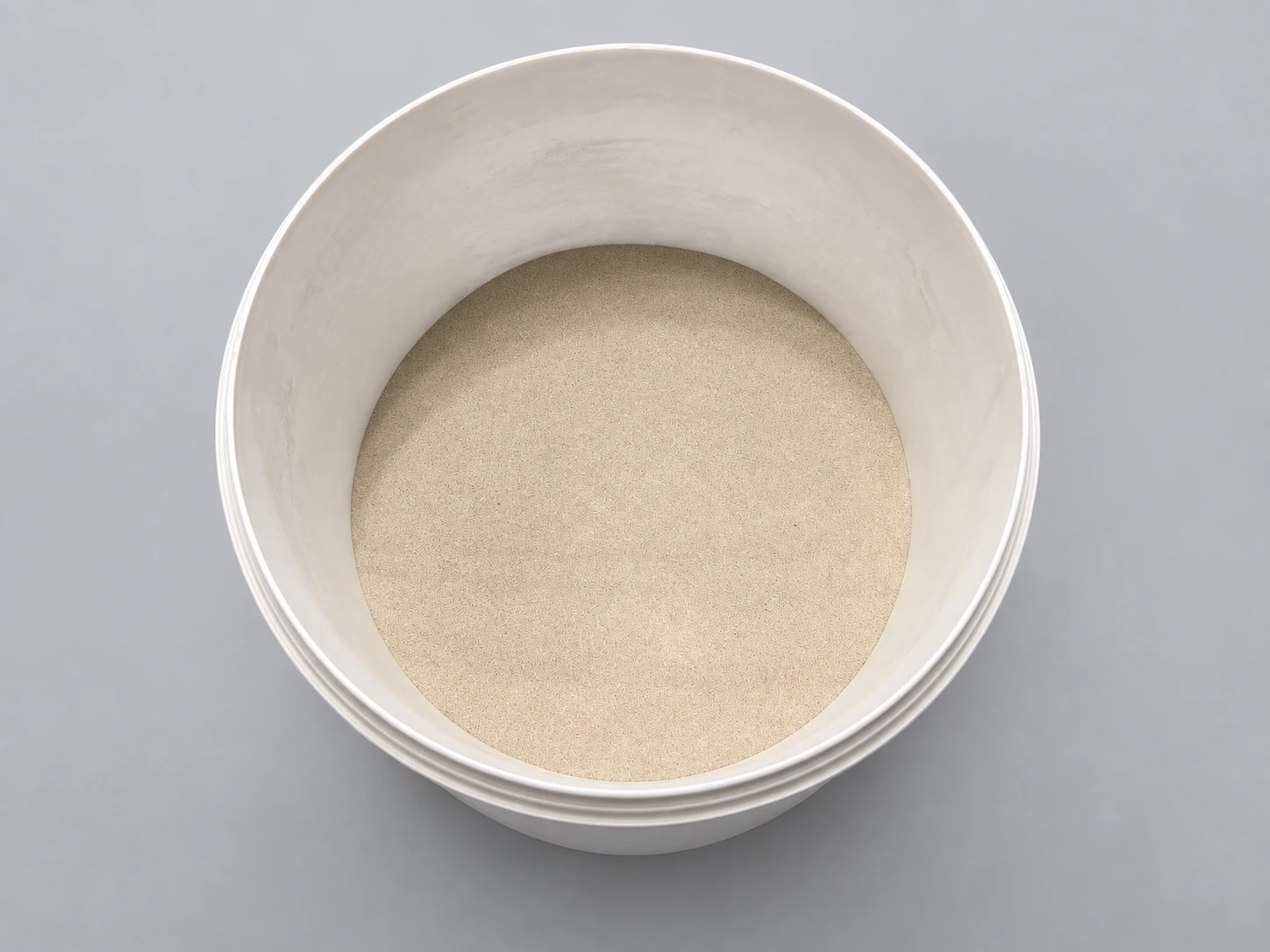
The fine SPH-150E grade can be evaluated as a lightweight filler in plasters, skim coats and other dry-mix formulations. Final performance depends on the binder, dosage, mixing method and required properties of the finished product.
It identifies a fine fraction with a nominal upper particle size of 150 µm; it is not a mesh designation. The sieve criterion and permitted residue should be stated in the order specification.
Hollow aluminosilicate particles can partially replace heavier mineral fillers and help reduce formulation density. Their effect on workability, surface finish and strength must be confirmed in a trial.
Agree the acceptance parameters before ordering: fraction, bulk density, moisture and sinker content. Where the project requires it, the method for reporting D10/D50/D90 can also be defined.
A controlled aluminosilicate microsphere grade for industrial formulations. Final suitability should be confirmed through application testing under the intended processing conditions.
The 0–150 µm fraction is intended for evaluation in thin coatings, polymers, fine compounds and processes with restricted dosing clearances. Its smaller maximum particle size supports smoother surface design, while rheology, incorporation and mixing conditions must still be confirmed in the target formulation.
SPHERON E has a light-grey-to-grey colour profile and parameters developed for industrial applications. Selection should compare not only colour but also density, sinker content and material behaviour during incorporation and mixing.
Technical data describes the supplied material but does not replace an application trial. We recommend comparing adjacent fractions at the same volume loading and evaluating viscosity, surface finish, density and the mechanical properties of the finished product.
Read the particle fraction selection guide