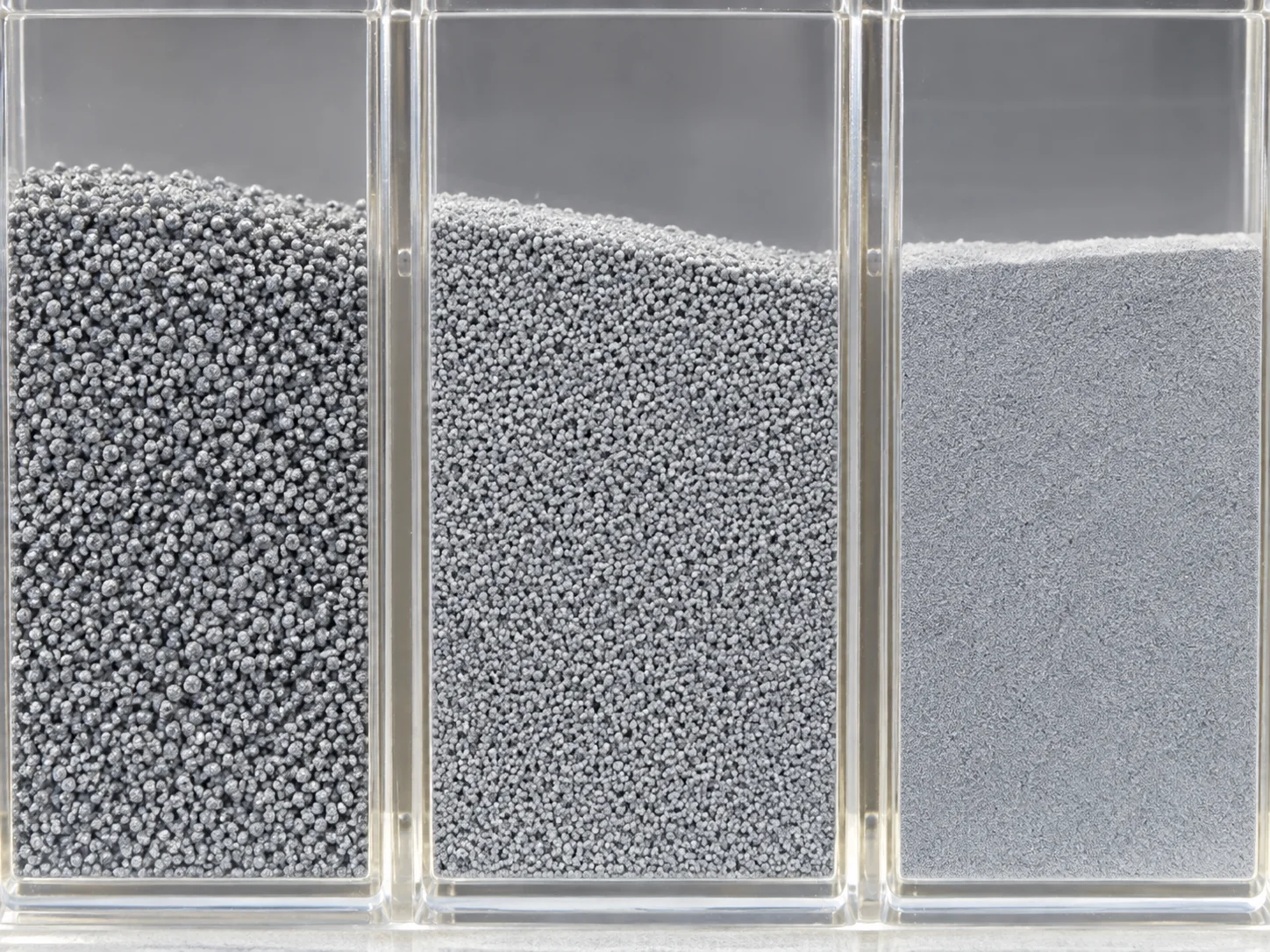
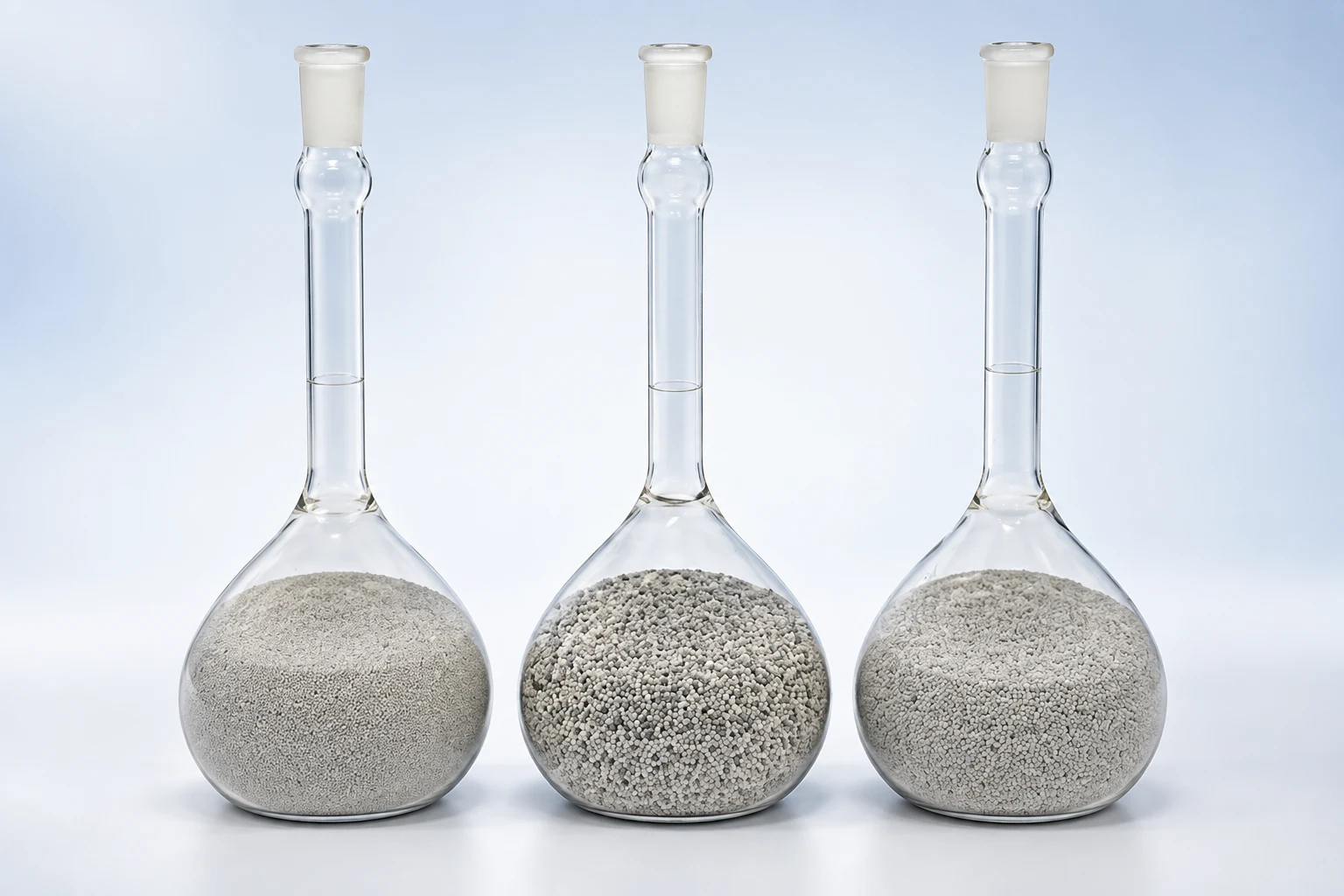
Particle size affects more than the appearance of a mixture. It also influences dosing, rheology, surface quality and the ability to fill spaces between larger formulation components.
Where should fraction selection begin?
Start by defining process constraints: the minimum nozzle or gap clearance, target layer thickness, mixing method and maximum acceptable particle size. Density and colour comparisons should follow only after these limits are understood.
A 0–300 µm specification does not mean that every particle is 300 µm. It describes a grading range, while product behaviour depends on the complete particle-size distribution. Final selection should therefore be confirmed in the target formulation.
When to choose 0–150, 0–300 or 0–500 µm
- 0–150 µm: thin coatings, fine fillers and formulations where surface smoothness and small dosing clearances matter.
- 0–300 µm: a versatile starting point for composites, dry mixes and many construction products where processing and density reduction must be balanced.
- 0–500 µm: thicker layers, lightweight mortars, concrete and refractory materials whose process can accept larger particles.
- 150–300 or 300–500 µm cuts: applications that require a more tightly defined particle window and reduced fine content.
Four parameters to assess together
Particle size alone is not enough. Bulk density, true density, moisture and sinker content should be reviewed together because they affect dosing, storage stability and the actual weight reduction achieved in the finished product.
- run trials with the same addition sequence intended for production;
- avoid excessive shear that may damage hollow particles;
- compare samples at equal volume loading, not only equal weight loading;
- measure viscosity, surface quality, density and mechanical performance.
The safest method: a short comparison series
In practice, two or three small batches using neighbouring fractions provide the clearest answer. This reveals not only laboratory properties but also mixing, dosing and application behaviour. The Spheron team can help identify suitable starting grades for such trials.